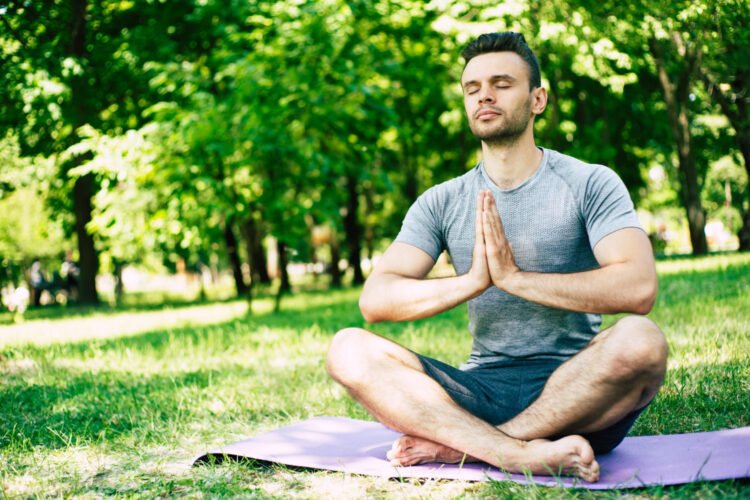
Morning Yoga for a Productive Day
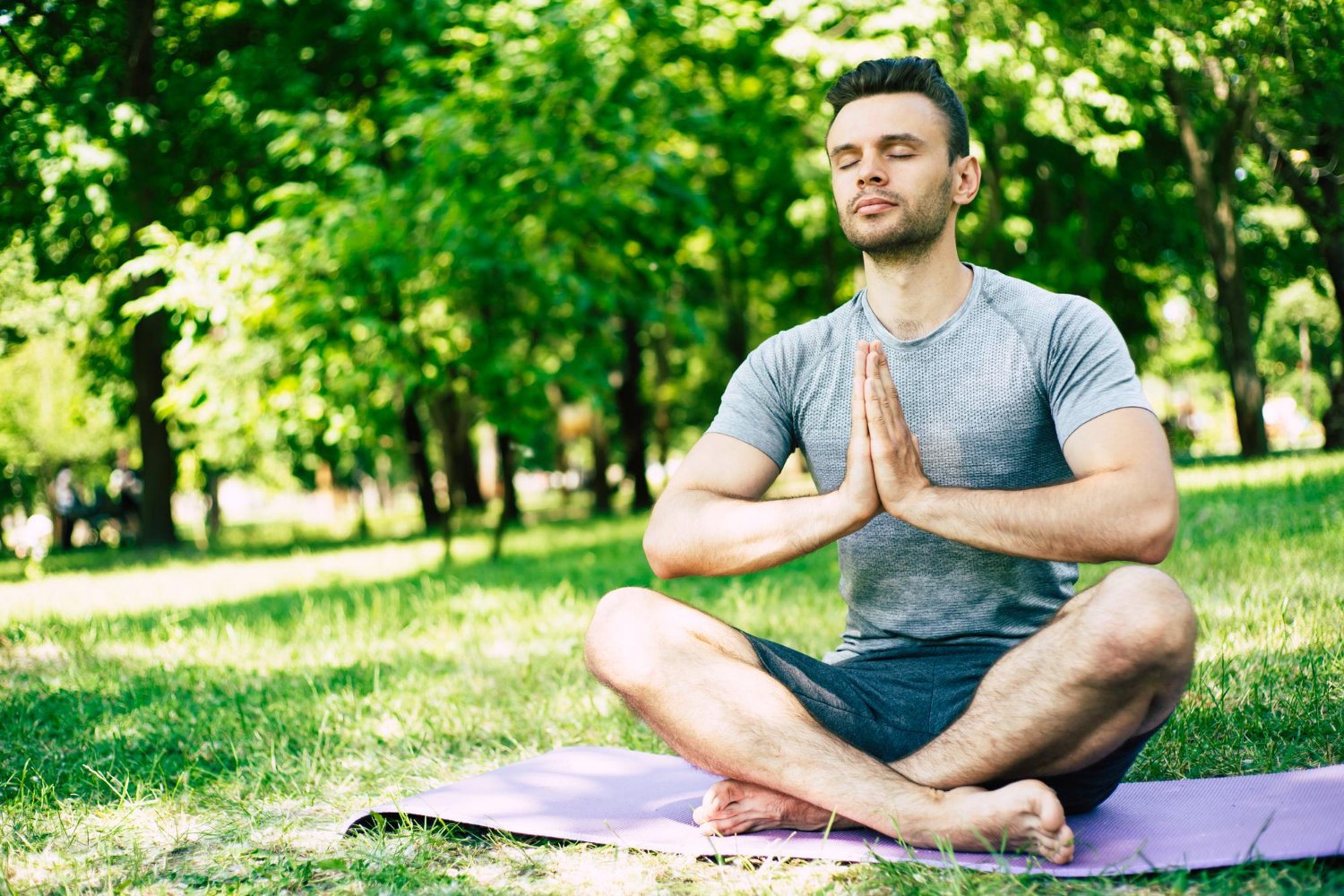
In the era of information technology and constant haste, modern life is often characterized by high levels of stress, which lead to physical and mental exhaustion. Chronic fatigue, scattered attention, and constant emotional tension become companions of many people striving for success. In such conditions, the search for effective tools to restore inner balance and strengthen health becomes critically important. Morning yoga is positioned not just as a physical exercise, but as a holistic practice that allows you to start the day with maximum potential.
Physical Benefits: Awakening the Body and Filling It with Energy
Morning yoga is a powerful tool for awakening the body after a night’s rest. It refreshes the mind, energizes the body, and improves circulation by saturating every cell with oxygen. This is not just a temporary boost but a deep activation of the body’s healing properties, bringing the whole system into balance.
Considering today’s sedentary lifestyle and long hours spent at the computer, which often result in back pain, poor posture, and muscle spasms, morning practice works as an effective antidote. It relieves tension, especially in the neck, back, and lower back — typical areas of discomfort. By combining stretching with muscle strengthening, it helps maintain healthy joints and spine, improving physical fitness and flexibility. This practice not only enhances physical condition but also removes physical obstacles that may negatively impact mental clarity and concentration throughout the day. It creates a direct link between physical well-being and overall productivity.
Mental and Psychological Benefits: Sharpness of Mind and Inner Peace
The impact of morning yoga on mental health is no less significant. Studies have shown that morning practice increases mental sharpness. This effect, lasting on average from four to ten hours, directly correlates with the most productive part of the working day. Thus, yoga in the morning is a conscious action that has direct and measurable benefits for cognitive functions.
In addition, yoga is a powerful tool for managing stress and anxiety. Practice lowers cortisol levels and anxiety, promotes inner peace, and improves mood. The combination of deep breathing, mindful movement, and focus helps harmonize body and mind, which is key for mental clarity. This is not just temporary relaxation but modulation of the body’s stress-response systems. Research has recorded that in women who practiced yoga regularly, depression levels decreased by 50% and anxiety by 30%. Regular practice increases heart rate variability, which indicates the body’s ability to adapt flexibly to stress. This means that yoga not only helps cope with current stress but also strengthens inner resilience, making a person more prepared for future challenges. It transforms from a “symptom relief” practice into “skill development.”
Breath as a Source of Strength: The Role of Pranayama
Pranayama is an integral and perhaps the most important part of yoga practice. It is not just the process of breathing but a conscious exercise for its development and expansion. Breathing, which is usually automatic, becomes a powerful tool for managing emotional state and life energy during pranayama. It directly influences both physiological and psychological states, has a profound effect on the nervous system, saturates the blood with oxygen, and provides an effective massage for the internal organs. Thus, successful yoga practice depends not only on physical form but also on the ability to control breathing.
Key Pranayama Techniques for a Productive Morning
For morning practice aimed at productivity, breathing techniques that both calm the mind and energize the body are especially useful.
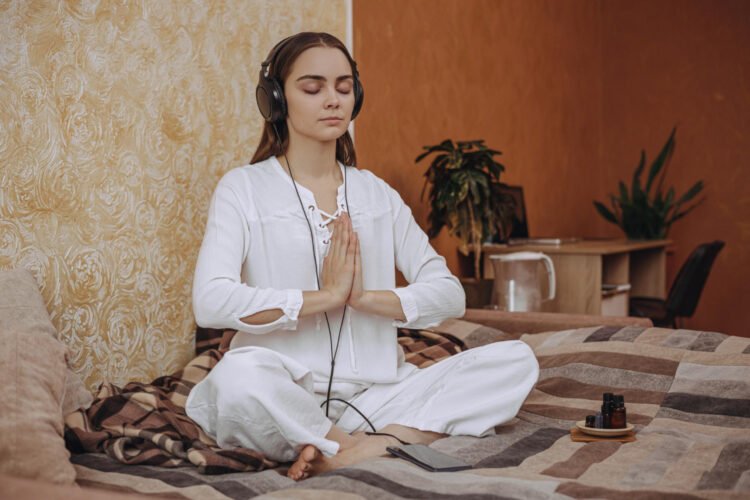
One of the simplest and most effective techniques is “Box Breathing” (Samavritti Pranayama), where inhalation, hold, exhalation, and the following hold are performed for the same count, for example, four. This quickly calms the mind, helps focus on the present moment, and achieves mental clarity.
For rapid energizing of the body and cleansing of the mind, the Kapalabhati technique, translated as “skull shining,” is used. It consists of short, forceful exhalations with active abdominal engagement followed by passive inhalations.
Also useful is Ujjayi breathing, which creates a characteristic hissing sound on both inhale and exhale. This helps maintain mindful breathing throughout the entire physical practice.
As a simple but powerful tip that can be applied at any time, it is recommended to make the exhale twice as long as the inhale. This immediately activates relaxation mechanisms in the nervous system and helps overcome stress.
Practical Sequence to Start the Day: Sun Salutation
The Sun Salutation (Surya Namaskar) is one of the most well-known and versatile yoga sequences. It consists of a series of twelve asanas that flow smoothly from one into another, synchronized with the breath. This dynamic sequence is designed to awaken the body, stretch and strengthen the muscles, and activate inner energy. Practicing it in the morning allows a gentle transition from rest to an active day, preparing both body and mind for the challenges ahead.
Step-by-Step Guide: How to Perform the Sequence
Below is a detailed description of each of the twelve asanas included in the sequence, with attention to correct breathing at each stage.
Mountain Pose (Tadasana): Stand tall with feet together, parallel. Imagine all four corners of each foot pressing evenly into the ground. Engage your knees, tuck the tailbone slightly, open the chest, and lengthen upward through the crown of your head. Take a deep breath in and on the exhale bring your palms together in front of your chest.
Standing Backbend (Hasta Uttanasana): Inhale and raise your arms upward, lengthen the spine, and gently arch backward.
Forward Fold (Padahastasana): Exhale and fold forward calmly, bringing the hands down to the feet. Let the head touch the knees.
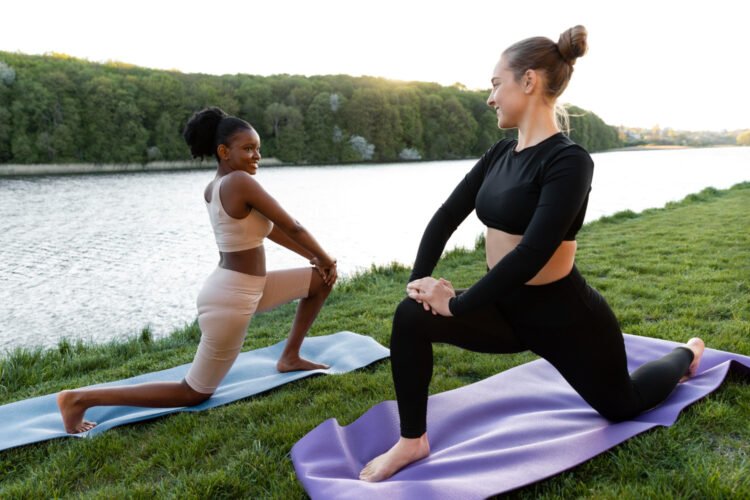
Warrior Pose (Virabhadrasana) or Lunge: Exhale, step the right leg back, lowering the hips so that the left shin is perpendicular to the floor. Inhale, lift the torso up and arch the back.
Plank Pose: Move into plank, keeping the body straight from head to heels.
Eight-Point Pose (Ashtangasana) or Chaturanga Dandasana: Exhale and lower down, bending the elbows so that only eight points touch the floor — feet, knees, chest, palms, and chin.
Cobra Pose (Bhujangasana) or Upward-Facing Dog (Urdhva Mukha Svanasana): Inhale, lift the upper body from the floor, straighten the arms, and arch through the lower back.
Downward-Facing Dog (Adho Mukha Svanasana): Exhale, lift the hips upward to form a triangle with the body, keeping arms and back in one straight line. This pose deeply relaxes the back muscles.
Warrior Pose (Virabhadrasana) or Lunge: Exhale, bring the right foot forward between the palms and assume the same position as in step 4, but with the opposite leg.
Forward Fold (Padahastasana): Exhale, bring the left foot forward to meet the right and fold forward as in step 3.
Standing Backbend (Hasta Uttanasana): Inhale, rise up and arch backward as in step 2.
Mountain Pose (Tadasana): Exhale and return to the starting position, standing tall with palms joined at chest level.
A full cycle consists of repeating this sequence, alternating the leading leg in steps 4 and 9.
Mindful Practice: Tips and Avoiding Common Mistakes for Beginners
For sustainable results in yoga, the key is not intensity but consistency. Experts emphasize that “ten minutes of yoga daily is better than an hour and a half once a week.” This is not just advice, but also a psychological strategy for building a habit. The hardest step for a beginner is simply to begin — or, as practitioners say, “roll out the mat.” Short but daily practice reduces mental resistance, making it more accessible and less overwhelming, greatly increasing the chances of long-term integration into life.
Equally important is the principle of “listening to your body.” Yoga is not about pain but about awareness. One should avoid excessive strain that can lead to injury, especially in the joints. This approach counters the common mindset of “pain equals progress” and encourages not only physical safety but also a deeper connection with one’s body.
Common Beginner Mistakes and How to Avoid Them
Mistake 1: Chasing perfection and ignoring technique. Beginners often try to go straight into a split or headstand without focusing on correct form in basic asanas.
Solution: Focus on correct alignment rather than depth of the pose. It is recommended to start with a teacher to learn the basics. Props such as a cushion or folded blanket can help make postures more comfortable.
Mistake 2: Forgetting about the breath. This is one of the most common errors, reducing the effectiveness of practice by breaking the flow between movement and breathing.
Solution: Learn to synchronize each movement with breath. For example, inhale when opening the chest and exhale when folding forward. Using pranayama techniques described earlier helps to develop this skill.
Mistake 3: Irregularity. Sporadic but long sessions are far less effective than short daily practice.
Solution: Establish a realistic routine, for example, ten to fifteen minutes every morning, and stick to it. Consistency is the key to success.
How to Integrate the Practice into Daily Life
Morning yoga is a powerful tool for boosting productivity and well-being on both physical and mental levels. It not only awakens and energizes the body but also sharpens the mind, reduces stress, and strengthens resilience to the challenges of modern life.
Ultimately, it is important to remember that yoga is not a destination but a journey. Each practice provides an opportunity to know yourself better, strengthen your health, and find inner harmony. The hardest part is already behind you — you have learned the theory. All that remains is to take the first step. Start your day the right way: roll out your mat and take your first mindful breath. May this practice become a source of strength and joy in your life.